
EVs, Hybrids & Charging feature
Level 1 vs Level 2 vs DC fast charging: what each is for
The short answer
Level 1 uses a standard household outlet and is the slowest option, fine for plug-in hybrids or very low daily mileage. Level 2 uses a dedicated 240-volt circuit, at home or in public, and is the realistic daily-charging solution most EV owners actually live on. DC fast charging delivers the most power and is built for topping up on a road trip, not routine overnight charging.
Assumes: United States market · General EV and plug-in hybrid charging, not one specific make or model · Charging speeds and electricity rates vary by equipment, utility, and location, so this stays qualitative rather than quoting specific numbers
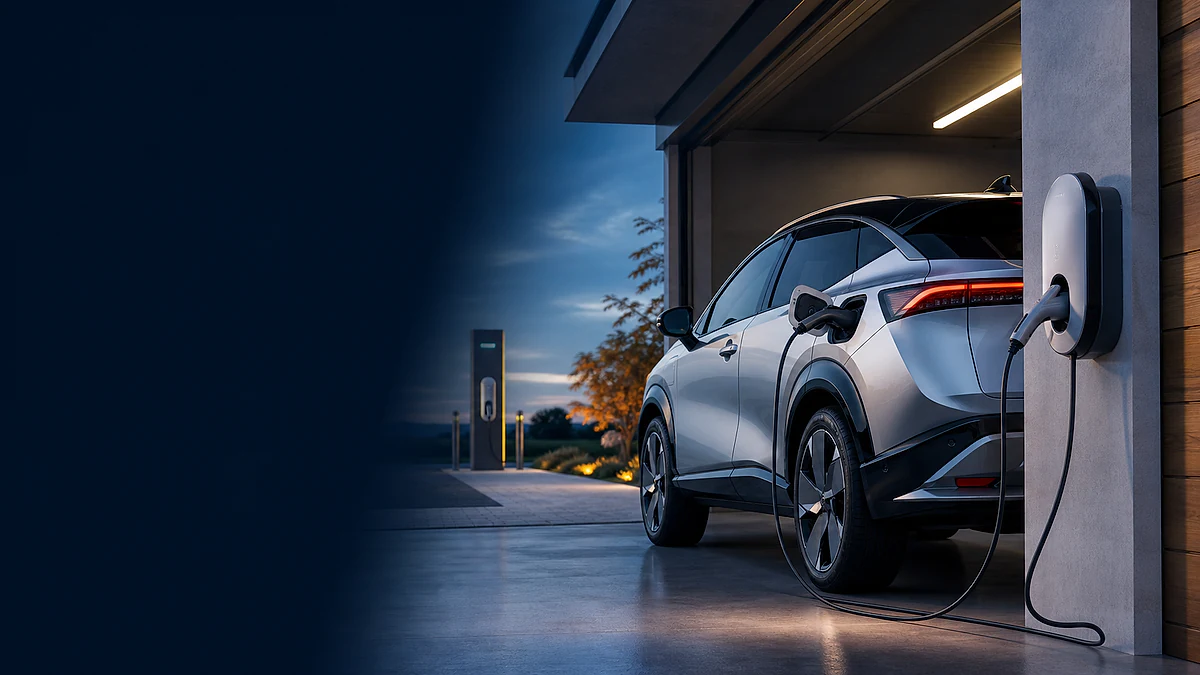
Three levels, three different jobs
“Charging” isn’t one thing, it’s three genuinely different setups that trade speed for convenience and cost in different ways. Level 1 is what you already have. Level 2 is what most owners actually live on day to day. DC fast charging is the one built for when you’re away from home and need power quickly. None of them is universally “the right one,” each is built for a different situation, and most EV or plug-in hybrid owners end up using more than one depending on the day.
Level 1: the outlet you already have
Level 1 charging just means plugging into a standard household outlet with the cable that comes with the car, no special equipment required. It’s the slowest of the three by a wide margin. For a plug-in hybrid with a smaller battery, or for an EV owner with genuinely low daily mileage and a full overnight window to charge in, Level 1 can realistically be enough. For most full EV owners driving a normal daily commute, it’s usually too slow to comfortably keep up night after night. Its real value is as a no-installation, no-cost-beyond-the-outlet fallback, useful while you’re deciding whether to invest in Level 2 equipment, or as a backup if that equipment is ever out of service.
Level 2: the everyday charging solution
Level 2 charging uses a dedicated 240-volt circuit, the kind an electric dryer or oven runs on, either installed at home or found at workplaces, shopping centers, and public charging stations. This is the realistic backbone of daily EV ownership for most drivers: plug in when you park for the evening, wake up to a full or nearly full battery, and rarely think about charging as a separate errand. If you’re an EV owner without home charging access, availability of Level 2 charging near where you live or work becomes one of the most important practical questions to answer before buying.
Installing home Level 2 charging generally means having an electrician assess your home’s electrical panel and run a dedicated circuit to wherever you park, similar in scope to adding a circuit for a large appliance. Not every home’s panel has spare capacity for this without an upgrade, which is worth finding out early in your shopping process rather than after you’ve already bought the car. It’s a one-time project, not a recurring cost, and for most owners with a driveway or garage, it’s worth doing before or shortly after taking delivery rather than living on Level 1 indefinitely.
DC fast charging: built for the road, not the driveway
DC fast charging delivers power at a much higher rate than either Level 1 or Level 2, and it’s designed around a completely different use case: adding meaningful range in a short stop, the way a gas station fill-up works, rather than topping off overnight. It’s the charging type that makes road trips practical, letting you add range during a rest stop instead of parking the car for hours. It’s generally not how you’d want to charge every single day, frequent reliance on it instead of slower home or Level 2 charging is harder on both your wallet and, over the long run, the battery itself.
How to actually plan a road trip around DC fast charging covers the strategy side of this in more depth.
Public charging reliability and etiquette
Public charging, whether Level 2 or DC fast, comes with a wrinkle home charging doesn’t: you’re sharing infrastructure with other drivers, and it isn’t always available exactly when and where you expect it. Building in a backup option for any public charging stop you’re relying on is a reasonable habit rather than overcaution. And once you’re done charging at a busy public location, especially a DC fast charger, moving your car promptly for the next driver is the kind of basic courtesy that keeps the whole system usable, the same unwritten rule as not lingering at a gas pump after you’ve paid.
Cold weather changes how much charging you actually need
Charging level aside, how much charging you need on a given day shifts with the weather, and that’s worth planning around rather than being surprised by. EVs with heat pumps retained about 83% of range in freezing weather in a Recurrent study, versus about 75% for vehicles relying on resistive heat. A car holding onto more of its range in the cold needs less charging to make up the difference, which matters most for anyone leaning on slower Level 1 charging through a genuine winter. If cold-weather range is a priority for you, whether a model uses a heat pump is worth asking about directly.
Whether to charge to 100 percent is a related habit question worth sorting out alongside which charging level you’ll rely on most.
Which one do you actually need
Most owners don’t choose one level, they use a mix: Level 2 for the daily routine, whether at home or nearby, and DC fast charging reserved for longer trips. Level 1 tends to work best as a backup or for plug-in hybrids rather than a full EV’s only charging method. The honest planning question isn’t “which is best,” it’s “what’s actually available to me most nights,” since that access matters more to day-to-day ownership than any other single factor.
Want to talk through how this applies to you? Book a call, Greenville, SC area or nearby.
Next steps
Figure out your realistic access to Level 2 charging, at home or nearby, before you commit to an EV, it’s the charging type that will carry most of your actual driving. If home charging is possible, have an electrician assess your panel early rather than waiting. Treat DC fast charging as the road-trip tool it’s built to be, and Level 1 as a fallback rather than a primary plan unless your daily mileage is genuinely low.
Sources
Facts on this page were last verified on .
Independent publication: the author works at Honda of Greenville, but this isn't an official Honda of Greenville or Honda Motor Co. page, and neither reviews, approves, or pays for its content. Content is educational, not mechanical, legal, or financial advice. Verify safety-critical items with a qualified technician and recall status by VIN.