
financing
How much should you put down on a car?
The short answer
There is no fixed dollar or percentage answer, it depends on your loan size, rate, and how long you plan to keep the car. What is true regardless: every dollar down reduces the amount financed dollar for dollar, which lowers both the payment and the total interest you pay over the loan. On the average new-car loan of $43,925, that trade-off adds up fast, so put down what you can without draining savings.
Assumes: United States market · Illustration uses the Q1 2026 average new-car loan of $43,925 at 6.39% APR · Assumes 60 and 72 month terms for the worked example
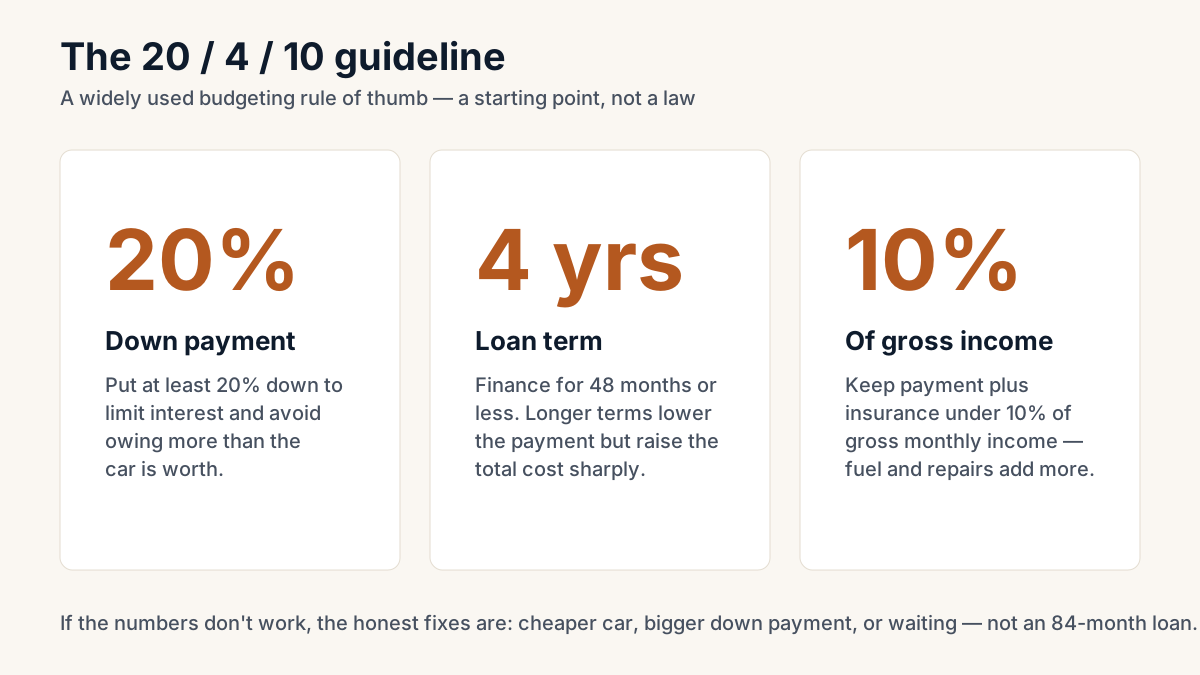
There is no universal number
Any guide that hands you a flat percentage is guessing on your behalf without knowing your loan, your rate, or your cash reserves. The honest answer is that it depends on three things: how big a loan you are avoiding, what rate you would pay on it, and how much cash you can put down without leaving yourself without a cushion. What follows is the math, not a rule of thumb.
What a down payment actually does
Mechanically, a down payment is simple: it reduces the amount you finance, dollar for dollar, before interest ever starts accruing. A smaller principal means a smaller payment at the same rate and term, and it means less total interest paid over the life of the loan, since interest is calculated on whatever balance remains outstanding. It also affects how quickly you build equity, the gap between what you owe and what the car is worth, which matters the moment you want to sell, trade, or if the car is ever totaled.
The math on an average loan
The average new-car loan in Q1 2026 was $43,925. Financed in full at the average 6.39% APR over an assumed 60 month term, that comes out to roughly $857 a month, illustrative math, not a quote. Stretch the same balance to 72 months instead and the payment drops to about $736, but you pay interest on a large balance for a year longer.
| Term | APR | Est. monthly payment |
|---|---|---|
| 60 months | 6.39% | ≈ $857 |
| 72 months | 6.39% | ≈ $736 |
Figures verified 2026-07-24. Based on the Q1 2026 average new-car loan amount of $43,925 at the Q1 2026 average new-car APR of 6.39%, assumed terms, not a quote.
A down payment works differently from either of those levers, it shrinks the balance itself, which lowers the payment at any term and cuts the total interest bill regardless of how long you finance. Every dollar you put down comes straight off that $43,925 starting point before any of this math runs. Put down a meaningful chunk and both numbers in that table move down with it.
The failure mode a down payment protects against
The specific risk a down payment guards against is being upside down, owing more than the car is worth. New cars lose value fastest in the first year or two, and with little or nothing down, your loan balance can sit above the car’s market value for a while, sometimes for years on a longer term. If you need to sell or trade during that window, you either write a check to close the gap or roll the shortfall into your next loan and start it already behind. This is worth understanding in more detail before you decide how much to put down, especially if you are also considering a longer loan term, which extends that exposure window further.
A trade-in counts as a down payment too
If you have equity in a car you are trading in, that equity works exactly like cash down, it reduces the new loan’s principal the same way. The reverse is also true: a trade with negative equity can increase the new balance instead, effectively acting like a negative down payment unless you cover the difference separately in cash.
What if you have little or nothing to put down
You can still finance a car with no down payment, plenty of lenders allow it, but you should walk in knowing what it means: the loan balance starts at the full price plus taxes, fees, and anything you rolled in, with no cushion against depreciation from day one. If that is your situation, a few things help more than a token down payment would: choosing a less expensive vehicle so the loan itself is smaller, keeping the term as short as your budget allows, and avoiding rolling in negative equity from a previous car on top of it. A small down payment is still better than none, since any amount reduces the principal before interest starts accruing, but do not let the absence of a large one stop you from buying something you can genuinely afford.
When to put more down, when less
More down makes sense when you have the cash without draining your emergency reserve, when you plan to finance for a longer term, or when the vehicle is known to depreciate quickly. Less down can be reasonable when your rate is already competitive, when you are financing for a short term, or when keeping cash liquid matters more to you than shaving interest off a loan you can comfortably afford either way. There is no universally wrong answer here, as long as you have actually run the comparison instead of guessing at a percentage.
Where the down payment money should come from
Cash you already have earmarked for the purchase, or genuine trade-in equity, both work cleanly. Two sources are worth avoiding: draining your entire emergency fund to hit a bigger number, and financing the down payment itself through a personal loan or credit card, which just moves the same debt somewhere else, usually at a worse rate than the car loan itself. If the honest amount you can put down without either of those shortcuts is smaller than you hoped, that is useful information about the purchase, not a problem to engineer around.
Next steps
Get your loan quote, the principal, rate, and term, before deciding how much to put down. Run the payment at a couple of down payment levels you could actually afford and compare the total interest, not just the monthly number. Then decide based on your own cash position and how the total fits your budget, not a percentage you read somewhere.
Sources
- Average new-car payment was $770/month in Q1 2026
- Q1 2026 average new-car APR ranged from 4.55% for excellent
Facts on this page were last verified on .
Independent publication: this site is not affiliated with, sponsored by, or endorsed by Honda or any manufacturer or dealership. Content is educational, not mechanical, legal, or financial advice. Verify safety-critical items with a qualified technician and recall status by VIN.