
feature
Should you charge an EV to 100 percent?
The short answer
Not as a daily habit for most drivers, keeping the charge level moderate day to day is the general guidance for lithium-ion batteries. Charging to 100% still makes sense before a long trip, or in cold weather when EVs lose an average of 20 to 22% of range at freezing. Starting with the 2026 model year, regulators require batteries to retain at least 70% of capacity for 8 years or 100,000 miles, a backstop, not a reason to ignore habits.
Assumes: United States market · General lithium-ion EV battery guidance, not one specific make or model · The 2026 CARB durability rule applies to 2026 model year vehicles and later only
Not every day, but not never either
The short version: most EV owners are better off not charging to 100% as a daily routine, but “never” is the wrong takeaway too. There are specific, sensible reasons to charge all the way up, and knowing when those apply matters more than treating 100% as either always fine or always forbidden.
Why moderate daily charging is the general guidance
Lithium-ion batteries, the type used in essentially every EV on the road, tend to experience more chemical stress sitting at a full charge for extended periods than sitting at a moderate charge level. This is why most EVs let you set a daily charge limit below 100% and why that habit is the general, widely recommended approach for everyday driving. It’s not a dramatic difference you’d notice day to day, it’s a long-term habit that plays out over years of ownership, similar in spirit to not leaving other lithium-ion electronics sitting at full charge on a charger indefinitely.
The same general principle applies at the other extreme. Routinely running a battery down close to empty before recharging isn’t the moderate habit either, it’s simply stress applied from the opposite direction. The daily-use sweet spot most manufacturers and owners settle into sits somewhere in the middle, comfortably below full and comfortably above empty, which is exactly why so many EVs make setting a daily charge limit a simple menu option rather than something you have to manage manually every night.
When charging to 100% is exactly the right call
None of that means 100% is off limits, it means it should be purposeful rather than automatic. Before a long trip where you need the maximum available range, charging to full is simply the correct move, that’s what the extra range is for. Occasional full charges for a specific reason don’t undo the benefit of a generally moderate daily habit, the concern is with keeping a battery topped off constantly, not with using it fully when you actually need to.
Winter is one of the best reasons to charge higher
Cold weather is a legitimate, recurring reason to lean toward fuller charges more often. EVs retain roughly 80% of their rated range at freezing temperatures on average, a loss around 20 to 22%, according to a Recurrent study covering roughly 30,000 vehicles. Starting a cold morning at a moderate charge level that would be plenty in mild weather can leave less real-world buffer than it looks like on paper. Charging closer to full more often through the coldest months is a reasonable trade-off against the general moderate-charging habit, not a contradiction of it, since the point of the moderate habit was never charging behavior for its own sake, it was protecting long-term battery health without sacrificing the range you actually need day to day.
The full breakdown of winter range loss covers why this happens and how much it varies by vehicle.
Charging away from home complicates the habit
The moderate-charging guidance is easiest to follow when you control your own charger and can set a daily limit once and forget about it. It gets murkier when you’re relying on a workplace charger, a public Level 2 spot, or any situation where you plug in less predictably than every night at home. In those cases, topping up closer to full when a charger happens to be available is a reasonable, practical trade-off against the general guidance, since you can’t always count on the next convenient charging opportunity showing up exactly when you need it. The moderate-charging habit is about long-run averages, not a rule that has to be perfectly enforced on every single plug-in.
The 2026 durability rule, and what it actually promises
Starting with the 2026 model year, California Air Resources Board rules require EV batteries to retain at least 70% of their original capacity for 8 years or 100,000 miles. That’s a real, regulator-backed floor for anyone shopping a 2026 model year or newer EV, and it’s worth knowing about. It is not, however, a reason to ignore charging habits, it’s a minimum guarantee against excessive degradation, not a promise that charging behavior doesn’t matter at all within that floor. Good daily charging habits and a regulatory durability minimum are complementary, not substitutes for each other, and the rule doesn’t apply at all to EVs built before the 2026 model year.
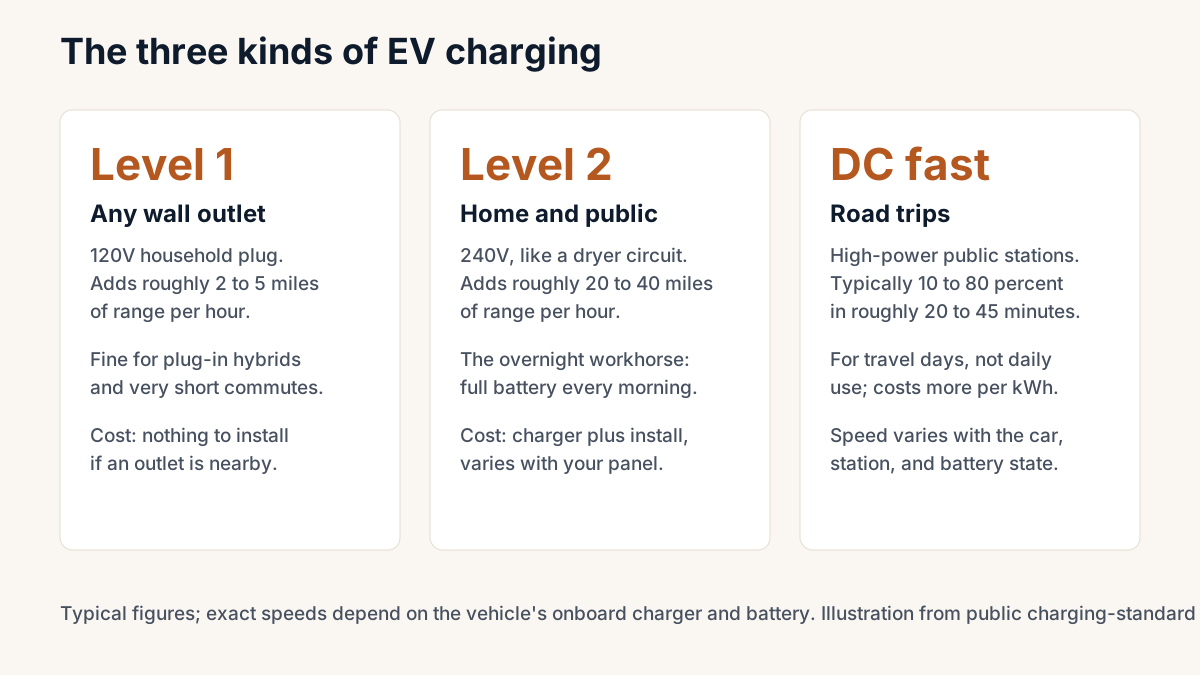
Which charging level you use daily is a separate decision from what percentage you charge to, but the two habits work together.
Making the moderate habit effortless
The easiest way to follow this guidance is to stop thinking about it as a daily decision at all. Most current EVs let you set a maximum daily charge limit once, in the car’s settings, and it applies automatically every time you plug in without requiring you to remember anything. Many also let you schedule a separate, higher charge target for a specific day, which is exactly what you’d use the night before a road trip or a cold-weather stretch. Setting both up once turns “should I charge to 100%” from a nightly question into a decision you only revisit a few times a year.
Next steps
Set a daily charge limit below 100% if your EV allows it, and treat full charges as something you do on purpose, before a long trip or heading into a cold stretch, rather than by default every night. Check whether your specific model lets you schedule or cap charging automatically, most current EVs do, which makes the moderate habit effortless once it’s set.
Sources
- Recurrent's 30,000-vehicle study: EVs retain roughly 80% of
- From the 2026 model year, CARB durability rules require batt
Facts on this page were last verified on .
Independent publication: this site is not affiliated with, sponsored by, or endorsed by Honda or any manufacturer or dealership. Content is educational, not mechanical, legal, or financial advice. Verify safety-critical items with a qualified technician and recall status by VIN.