
buying
Should you tell the dealer about your trade-in upfront?
The short answer
No, not before the new car's price is settled. Mentioning a trade-in early lets a dealer blend it into one combined number, where a generous-looking trade allowance can quietly offset a worse price on the car itself. Negotiate the out-the-door price on the new car alone first, get an outside offer on your trade separately, and only then let the dealer make its own offer, informed by CFPB guidance to compare total costs, not a single blended figure.
Assumes: United States market · Franchised dealer context · Assumes a separate trade-in vehicle is part of the deal
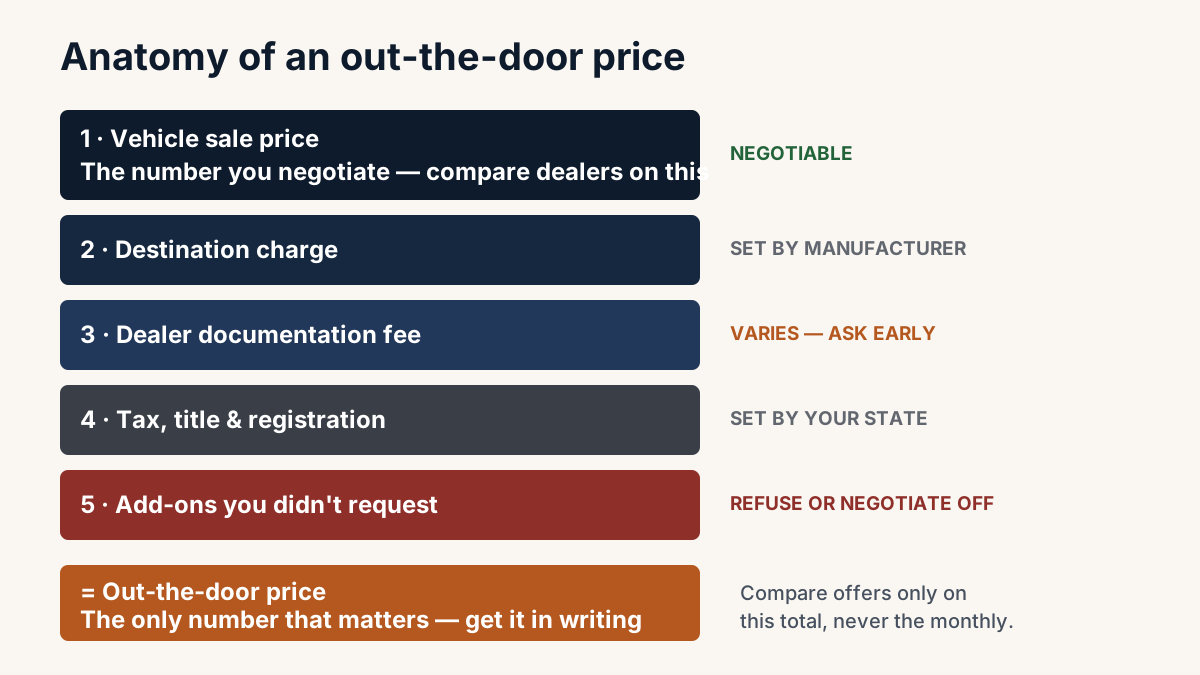
The short answer: keep it separate, at least at first
A car purchase with a trade-in is really two transactions wearing one deal’s clothing: what you pay for the new car, and what you get for the old one. Mentioning your trade before the new car’s price is settled gives the dealer room to blend those two numbers into one, and a blended number is much harder to evaluate than two clear ones.
Why blending the deals hides the real price
A dealer can offer what looks like a generous trade-in value while quietly holding firmer on the new car’s price, or the reverse, and either way you’d have a hard time telling which lever actually moved. Negotiating the two separately forces each number to stand on its own. You can’t tell whether a trade offer is fair unless you already know, independently, both what the new car costs and what your trade is actually worth elsewhere.
What to do instead, step by step
Settle the out-the-door price on the new car first, treating the deal as if you have nothing to trade. Separately, get an outside offer on your current car, an online instant-offer tool or a competing dealer’s written appraisal works, so you have an independent number in hand. Only once both of those are settled should you let the dealer make its own trade offer, which you can now measure against a real outside benchmark instead of taking it on faith.
When it’s fine, even smart, to mention it early
There’s a legitimate exception: if you need the trade-in’s value to know whether you can afford the new car at all, or you simply won’t consider a purchase without trading, it’s reasonable to ask for a preliminary trade estimate early just to sanity-check the math. The distinction is asking for a rough, non-binding number for your own planning versus letting that number get folded into the new car’s price negotiation before it’s settled.
What CFPB guidance adds to this
CFPB guidance points at the same underlying discipline from a different angle: get preapproved for financing and compare total cost before you’re at the dealer, rather than negotiating loan terms and price together in one conversation. The trade-in follows the identical logic. Keeping the new car’s price, your trade’s value, and your financing as three separate conversations, each measured against its own outside benchmark, is what actually protects you from a deal that looks fine in total but is quietly weak in one specific piece.
Mistakes this sequencing prevents
The most common trap is accepting a trade allowance that sounds high without separately confirming the new car’s price is actually competitive, the “high” trade number can simply be covering for a worse deal elsewhere on the sheet. The mirror-image mistake is negotiating the new car’s price hard and then accepting whatever trade number comes back without checking it against an outside offer, assuming a great price on one side guarantees fairness on the other. Neither assumption holds, because the two numbers were never actually independent once they were negotiated together.
For the full list of things worth holding back at the dealership, see what you should never tell a car dealer.
Getting an outside trade offer, in practice
An outside benchmark doesn’t need to be complicated. Online instant-offer tools can give you a same-day number for many vehicles, and a competing dealer, even one you have no intention of buying from, will often appraise your trade in exchange for the chance to make an offer. Collecting one or two of these before you ever discuss your trade with the dealer you’re actually buying from gives you a real number to hold their offer against.
What if your trade still has a loan on it
An outstanding loan balance on your trade adds a wrinkle but doesn’t change the sequencing advice. You still want the new car’s price and an outside trade value settled first. Once you have both, you can see clearly whether your trade’s value covers what you still owe, and if it doesn’t, understand exactly how much of that gap is being rolled into the new financing, a number that’s much easier to spot once the other two pieces aren’t blended together.
Reading a dealer’s trade offer once you finally get one
When the dealer’s trade number does come in, compare it directly against your outside offers rather than judging it in isolation. A number close to or above your best outside offer is a good sign. A number meaningfully below every outside offer isn’t necessarily unfair on its own, dealers sometimes price trades conservatively, but it’s a legitimate point to negotiate, especially if the new car’s price is otherwise solid and the trade is the one piece dragging the deal down.
Why some buyers still choose to sell their trade privately
Separating the two negotiations sometimes reveals that a private sale would net meaningfully more than any dealer trade offer, since a dealer has to resell your trade at a profit while a private buyer is just paying market value. That’s more effort, listing the car, screening buyers, handling the paperwork yourself, so it’s a genuine tradeoff between convenience and value, not an automatic answer either way.
Next steps
Negotiate the new car’s out-the-door price first, as though you have no trade-in. Get an independent value on your current car separately. Then bring the two together, and let the dealer’s trade offer earn its place against a number you already know is real.
Sources
- FTC consumer guidance: get the full out-the-door price in wr
- CFPB guidance: get preapproved before visiting the dealer an
Facts on this page were last verified on .
Independent publication: this site is not affiliated with, sponsored by, or endorsed by Honda or any manufacturer or dealership. Content is educational, not mechanical, legal, or financial advice. Verify safety-critical items with a qualified technician and recall status by VIN.