
buying
What should you never tell a car dealer?
The short answer
Don't lead with your monthly payment budget, whether you're trading in a car, or how much you can put down, revealing these early lets a dealer solve for numbers that favor them, not you. Get preapproved financing first so you have a real rate to compare against, per CFPB guidance, and negotiate only the out-the-door price, in writing, before any of that other information matters.
Assumes: United States market · Franchised dealer sales process · Applies to both new and used vehicle purchases
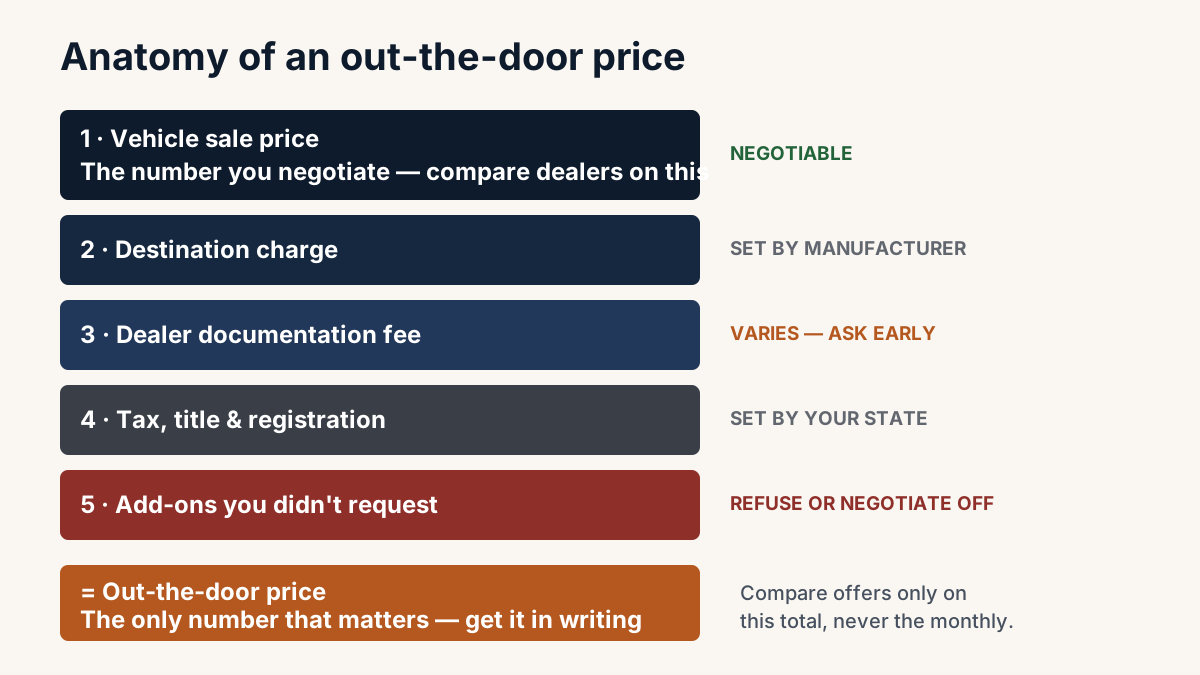
Why “what payment are you looking for” is the question to dodge
This is one of the oldest questions in the business, and it works because it feels like a harmless, friendly icebreaker. It isn’t. A monthly payment is built from three separate levers, price, interest rate, and loan term, and any one of them can be adjusted to hit almost any number you name, while the total you pay over the life of the loan moves in the background. Answer with a payment figure and you’ve handed over the target; the dealer can now solve backward from it using whichever lever is most profitable for them. The out-the-door price is the only number worth negotiating, and it should be settled before payment structure ever comes up.
Why your trade-in and down payment can wait
Telling a dealer about your trade-in or your down payment before the new car’s price is settled invites the same problem in a different shape: three separate transactions, the car’s price, your trade’s value, and the financing, get blended into one deal that’s much harder to evaluate. A generous trade allowance can quietly offset a worse price on the new car, and you’d never see it happen because you never saw the new car’s price negotiated on its own. Settle the price first, on the car alone, then handle the trade and the financing as their own, separate conversations.
Why “I love this car” is expensive information
Enthusiasm is useful information for a salesperson and expensive information for a buyer. Once it’s clear you’ve mentally moved in, some of your walk-away leverage is gone, because everyone in the room now believes you’re staying regardless of price. That doesn’t mean pretending to dislike the car, it means keeping the decision visibly open until the number is one you’re actually ready to sign, and being willing to say so.
Why a firm deadline works against you
“I need to drive home in something today” tells the dealer that time, not price, is your priority, and time is the one thing a dealer can usually outlast you on within a single visit. If you genuinely have a deadline, that’s fine, just don’t announce it as leverage against yourself. The stronger position is the one CFPB guidance points toward: shop with financing already arranged, so no single visit has to end in a signature for you to be in a strong position.
What’s actually fine to share
None of this means being cagey about everything. It’s fine, and useful, to be specific about the exact vehicle, trim, and options you want, vague shoppers get vague, slower answers. It’s fine to say you’re comparing written quotes from other dealers, that’s leverage working in your favor, not against it. It’s fine to ask direct questions about fees, inventory, and incentives. The line isn’t “share nothing,” it’s “don’t hand over the three things, payment target, trade and down payment details, and urgency, that let someone else control the shape of the deal before you’ve agreed to a price.”
It’s also fine, and often useful, to say plainly that you’re comparing this dealer against others on the identical vehicle. That single sentence does more work than any amount of vague hinting, it tells the dealer exactly what standard their number needs to meet without giving away anything that weakens your position.
The one number to lead with instead
Lead with the out-the-door price, and only that. FTC guidance backs this directly: get the full, itemized out-the-door total in writing, and compare dealers on that number, never on a monthly payment. Ask for it by email before you visit, on the exact vehicle, so you’re negotiating a number you can actually compare against other written offers, not a verbal figure that can shift once you’re in the building.
Mistakes that undo your leverage
Answering “what payment works for you” with an actual number is the single most common leverage-losing move, followed closely by mentioning a trade-in before the new car’s price is locked. A close third is treating a preapproval from your own bank or credit union as unnecessary because “the dealer will find something,” when a preapproval, per CFPB guidance, is exactly what lets you evaluate the dealer’s financing offer instead of just accepting it. If you’ve already made one of these mistakes mid-conversation, you can still reset: ask for the itemized out-the-door price in writing before going further, and treat everything before that as non-binding.
For the mechanics of turning a firm number into a lower one, see how to negotiate a new car price, and if a trade-in is part of your deal, here’s more on whether to mention it upfront.
Why this isn’t about being dishonest
None of this is a recommendation to lie. It’s a recommendation to sequence what you share so that price gets negotiated on its own merits before anything else complicates it. There’s a real difference between deception and simply not volunteering information that isn’t relevant yet, declining to state a payment target isn’t a lie, it’s recognizing that the honest answer, “I haven’t decided how I’m financing yet,” is also the answer that protects you.
What salespeople are trained to listen for
Across the desk, a big part of the job is figuring out quickly what a customer cares about most, price, payment, a specific feature, a timeline, because that’s the fastest route to a signed deal. That’s not a criticism, it’s how the job works, and it’s not a secret. Knowing that the questions early in a conversation are often information-gathering, not just small talk, is enough by itself to change how you answer them. You don’t need to be suspicious of every question, just aware that friendly and irrelevant to price aren’t always the same thing.
The finance office runs the same play, later
Everything above about payments applies again, in a different room, once the car’s price is settled. The finance office often asks a version of the same question, “what payment are you comfortable with,” when presenting extended warranties, GAP coverage, and other add-on products. The fix is identical: ask for the price of each product individually, in writing, rather than reacting to how it changes a blended monthly number. None of these products are automatically bad, but evaluating them by their actual price, on their own, is the only way to know if they’re worth it to you.
What a realistic conversation sounds like
A dealer opens with something like “what payment were you hoping for.” The strong response isn’t silence or hostility, it’s a redirect: “I’d rather work from the out-the-door price first, then we can talk financing.” If they press for a trade-in value before the new car’s price is set, the same tool works: “Let’s settle the new car’s number first, then I’ll tell you about my trade.” Neither response is confrontational, both simply keep the negotiation in the order that protects you.
Mistakes people make trying to follow this advice
Some buyers overcorrect into being unhelpfully vague about the vehicle itself, which slows down getting real quotes for no benefit, specificity about the car you want is different from specificity about your budget or urgency. Others hold their cards so close that they never actually state what they need, which just means more back-and-forth without getting closer to a number. The goal isn’t secrecy for its own sake, it’s making sure the price gets negotiated before payment, trade, and urgency complicate it.
Next steps
Get preapproved financing before you shop, so you have a real number to measure any dealer offer against. Request itemized out-the-door quotes by email on the exact vehicle, without volunteering a payment target, trade details, or a deadline. Then negotiate the one number that matters, and let the rest of the deal follow from it.
Sources
- FTC consumer guidance: get the full out-the-door price in wr
- CFPB guidance: get preapproved before visiting the dealer an
Facts on this page were last verified on .
Independent publication: this site is not affiliated with, sponsored by, or endorsed by Honda or any manufacturer or dealership. Content is educational, not mechanical, legal, or financial advice. Verify safety-critical items with a qualified technician and recall status by VIN.