
Used Cars & Inspections buying
What questions should you ask a used car seller?
The short answer
Ask why they're selling, whether they're the original owner, and for full service records. Ask directly about accidents, warning lights, and any open recalls, then verify the answer yourself through a vehicle history report and NHTSA's free recall lookup, standard FTC-recommended due diligence. Ask if an independent inspection at a shop of your choosing is acceptable. How a seller answers, and which questions make them uncomfortable, tells you as much as the answers themselves.
Assumes: United States market · Applies to both dealer and private-party sellers · Verbal answers should be verified independently, not taken at face value
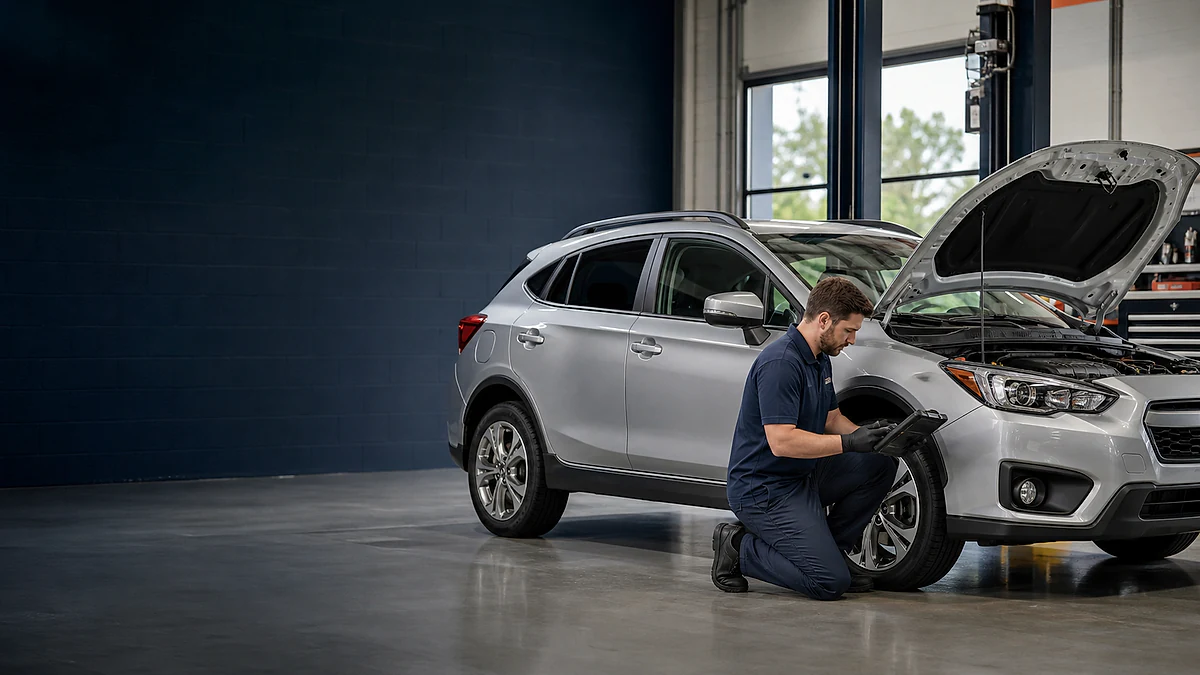
The questions, grouped by what they actually reveal
A good pre-purchase conversation is not a script, it’s a way to surface problems before you spend a Saturday on a car that was never going to work out. Ask these directly, and pay attention to how they’re answered, not just what’s said.
About the car’s history
- Why are you selling it?
- Are you the original owner? If not, how many owners has it had?
- Has it ever been in an accident, even a minor one?
- Has it ever had any flood or standing-water exposure?
- Is the title in hand, in your name, with no lien or a clearly explained payoff remaining?
About maintenance
- Do you have service records I can see?
- When was the last oil change, and what other maintenance has been done recently?
- Is there any major scheduled maintenance coming due?
- Are there any current issues, warning lights, noises, or things that “just need attention eventually”?
About how it was actually used
- What did you mainly use it for, commuting, road trips, towing, hauling gear?
- Roughly how many people drove it regularly?
- Was it ever used commercially, for rideshare, delivery, or business driving?
- Has it typically been garaged, or mostly parked outside?
About recalls and paperwork
- Would you mind if I check the VIN against NHTSA’s free recall lookup before we go further?
- Are you comfortable with me pulling a vehicle history report on this VIN?
- Is there anything on the title or paperwork I should know about upfront?
About the deal itself
- Is the price negotiable, and is there a reason it’s priced the way it is?
- Are you open to an independent inspection at a shop of my choosing?
- Would you come along for a real test drive, including highway speed, not just a loop around the block?
Why the reaction matters more than the words
Across the desk, the useful signal is rarely the answer itself, it’s how quickly and clearly it comes. A seller who owns the car’s history gives specific, consistent answers without prompting. A seller who gets vague, changes the subject, or seems to be hearing the question for the first time about something they’d know cold if it were true, that hesitation is worth more than whatever they end up saying.
Follow up when an answer doesn’t sit right
When something feels off, don’t let it slide, ask a specific follow-up instead of moving on to the next item on your list. “You mentioned a repair, who did the work, and do you still have the invoice?” gets you much further than accepting a vague answer at face value. A seller who can produce documentation on the spot has just told you something good. A seller whose answers get vaguer with each follow-up, rather than more specific, has told you something too.
Asking a dealer instead of an owner
Adjust these questions when you’re talking to a salesperson rather than the person who actually drove the car. A dealership representative usually can’t answer “why are you selling it” the way an owner can, so ask instead where the car came from, a trade-in, an auction, an off-lease return, whether it’s been reconditioned, and what that reconditioning included. The core questions about history, maintenance, and inspection still apply, they’re just aimed at someone representing the car rather than someone who lived with it.
Verify everything, regardless of how good the answers sound
None of these questions replace the paperwork. The FTC’s standard guidance is to get a vehicle history report and check for open recalls before buying any used car, and that applies just as much to a seller who answered every question perfectly as one who didn’t. A confident, friendly seller is not a substitute for independent verification.
Walk-away signals in the answers themselves
- Defensiveness or irritation at reasonable, direct questions.
- Answers that contradict each other from one question to the next.
- “I don’t know” about basic maintenance on a car the seller claims to have owned for years.
- Refusing an independent inspection or a VIN check without a clear reason.
- Pressure tactics, “someone else is coming to look at it today,” used to rush your decision before you’ve verified anything.
Ask yourself a few of these too
Before you get too attached to a specific car, turn a couple of these questions on yourself. Does the price still make sense given what the seller just told you? Would you be comfortable explaining this exact history to someone else if you resold the car later? And if a question makes you hesitant to even ask it out loud, that hesitation is usually a sign you already suspect the answer, which is exactly why it’s worth asking anyway.
Ready to talk through your actual deal? Book a call, Greenville, SC area or willing to travel here.
Next steps
Work through these questions before you agree to a test drive, not after. Then confirm what you’re told with a real history check and, if the car still checks out, an independent inspection before you commit to anything.
Sources
Facts on this page were last verified on .
Independent publication: the author works at Honda of Greenville, but this isn't an official Honda of Greenville or Honda Motor Co. page, and neither reviews, approves, or pays for its content. Content is educational, not mechanical, legal, or financial advice. Verify safety-critical items with a qualified technician and recall status by VIN.